

Why some of the most powerful tools for supporting our health aren't found in a supplement bottle.
Open Instagram for five minutes and you'll probably be told you need a new supplement.
A new detox.
A new morning routine.
A new wearable.
A new superfood.
A new biohack.
A new protocol.
And somehow, in our attempt to become healthier, wellness itself has become another source of stress.
I've been guilty of this too.
I've spent years learning about holistic health, functional wellness, bioenergetics, supplements, drainage, nervous system support, environmental toxins and all the deeper layers of healing.
And I absolutely believe there is a time and place for those tools.
But the further I've gone into this work, the more I keep coming back to something incredibly simple:
Before we add more, we need to make sure we're doing the basics.
Because our bodies don't only need protocols.
They need sunlight.
Sleep.
Clean air.
Clean water.
Real food.
Movement.
Human connection.
Purpose.
Faith.
Breathing.
Nature.
Rest.
Sometimes the most "advanced" thing we can do for our health is return to the way humans were designed to live.
We've Turned Wellness Into Another Full-Time Job
I see so many women trying desperately to feel better.
Their counters are covered in supplements.
They're listening to health podcasts while researching symptoms.
They're eliminating foods.
Tracking sleep.
Tracking glucose.
Tracking hormones.
Trying the newest detox.
Trying to regulate their nervous system while simultaneously worrying about whether they're regulating their nervous system correctly.
It's exhausting.
And there's an important question I think we need to ask:
Are all the things we're doing to become healthier actually making our lives healthier?
Because if your wellness routine leaves you anxious, overwhelmed and afraid to do anything "wrong," we've missed something.
Holistic health should bring us closer to our bodies—not make us afraid of them.
What Does "Back to Basics" Actually Mean?
This is one of the pillars behind my work at Waves & Roots Wellness.
Before getting lost in complicated protocols, I like to come back to the foundations.
Not because they're trendy.
Because they're foundational.
1. Get Outside and See the Sun

Morning sunlight is one of the simplest wellness tools available to us.
Getting outside after waking helps give your brain and body an important environmental cue that daytime has begun, supporting your circadian rhythm and helping set the stage for sleep later that night.
And sunlight isn't just something to squeeze into a five-minute "wellness routine."
Go outside.
Walk.
Drink your coffee on the porch.
Let the kids play.
Watch the sunset.
Spend time in the natural world.
Our bodies need to know what time of day it is.
2. Protect Your Circadian Rhythm
Our bodies thrive on rhythm.
Light during the day.
Darkness at night.
Movement during waking hours.
Rest when the day is over.
Yet modern life has made it incredibly easy to override those signals.
Bright screens late at night. Artificial light everywhere. Irregular sleep. Constant stimulation.
You don't need a complicated sleep biohack to start supporting your circadian rhythm.
Start with the basics:
Get morning light.
Move your body during the day.
Dim the house at night.
Put the phone away. Turn off WI-FI at night.
Keep a fairly consistent bedtime.
Let nighttime actually feel like nighttime. Create a completely dark and comfortable space.
3. Prioritize Good Sleep

We cannot out-supplement chronically poor sleep.
Sleep is when the body gets an opportunity to restore and recover.
Yet we often treat it like the first thing we're willing to sacrifice.
Before buying another product promising more energy, look at your sleep.
Not perfect sleep—especially if you're raising young children.
But protected sleep.
Create a calming nighttime routine. Keep your room dark and comfortable. Reduce stimulation before bed. Give yourself permission to stop.
Rest is not laziness.
Rest is part of health.
4. Pay Attention to the Air You Breathe
We take thousands of breaths every day, and most of it is inside.
That makes the quality of our indoor environment worth paying attention to.
Open windows when conditions allow.
Address moisture and mold problems rather than masking them.
Change HVAC filters.
Reduce unnecessary fragrances and harsh household chemicals.
Consider good-quality air filtration when appropriate. I recommend JASPR air scrubbers!
You don't need to create a perfectly sterile home.
Just create a home where your body isn't constantly being asked to deal with unnecessary environmental stressors.
5. Drink Quality Water
Another basic we somehow manage to overcomplicate.
Our bodies need adequate hydration.
Start there. and then possibly consider whole-house filtration if the water in your area is really bad!
Choose good-quality drinking water when accessible, and remember that hydration isn't about obsessively carrying around a gallon jug.
Minerals and electrolytes can matter too, particularly with heavy sweating or exercise.
But once again:
Foundation first. Optimization second.
6. Eat Food That Looks Like Food

This may be one of my biggest beliefs.
We have become so obsessed with supplements that sometimes we forget what supplements are supposed to do:
supplement a nourishing diet.
Protein.
Vegetables.
Fruit.
Healthy fats.
Mineral-rich foods.
Quality carbohydrates.
Whole foods.
Locally grown and organic foods when they're accessible and practical for your family.
I'm much more interested in what someone eats every day than the newest $70 powder sitting in their cabinet.
Supplements can absolutely be useful.
I use them.
I recommend them when appropriate.
But more supplements do not automatically equal more health.
Sometimes we need fewer capsules and more nourishment.
7. Put Your Feet on the Ground
There is something deeply regulating about being outside.
Bare feet in the grass or sand.
Gardening.
Walking on the beach.
Sitting underneath a tree.
Whether you call it grounding or simply spending time in nature, the bigger message is the same:
Get out of the artificial environment for a while.
Put the phone down.
Feel the sun.
Feel the breeze.
Let your senses experience something other than screens, notifications and fluorescent lights.
8. Breathe Like Your Body Is Safe
Breathing is something we do all day without thinking about it.
But when we're chronically stressed, our breathing can become shallow and hurried too.
You don't need a complicated 30-minute breathwork routine.
Sometimes it's simply:
Slow down.
Breathe through your nose comfortably.
Take a few slower breaths.
Let the exhale lengthen.
Relax your shoulders.
Notice your body.
A few intentional minutes can become a small signal that you don't have to rush through every moment of your life.
9. COMMUNITY Is Healthcare Too
This one deserves capital letters.
COMMUNITY.
We were never meant to do everything alone.
Humans need humans.
We need girlfriends.
Family dinners.
Neighbors.
Church communities.
People who check on us.
People we laugh with.
People we can call when life falls apart.
Moms especially were never designed to raise children completely isolated while simultaneously working, managing a household, keeping appointments, exercising, preparing perfect meals and somehow "prioritizing self-care."
Sometimes what your nervous system needs isn't another adaptogen.
It's a friend sitting across the table from you.
10. Don't Forget Your Spiritual Health
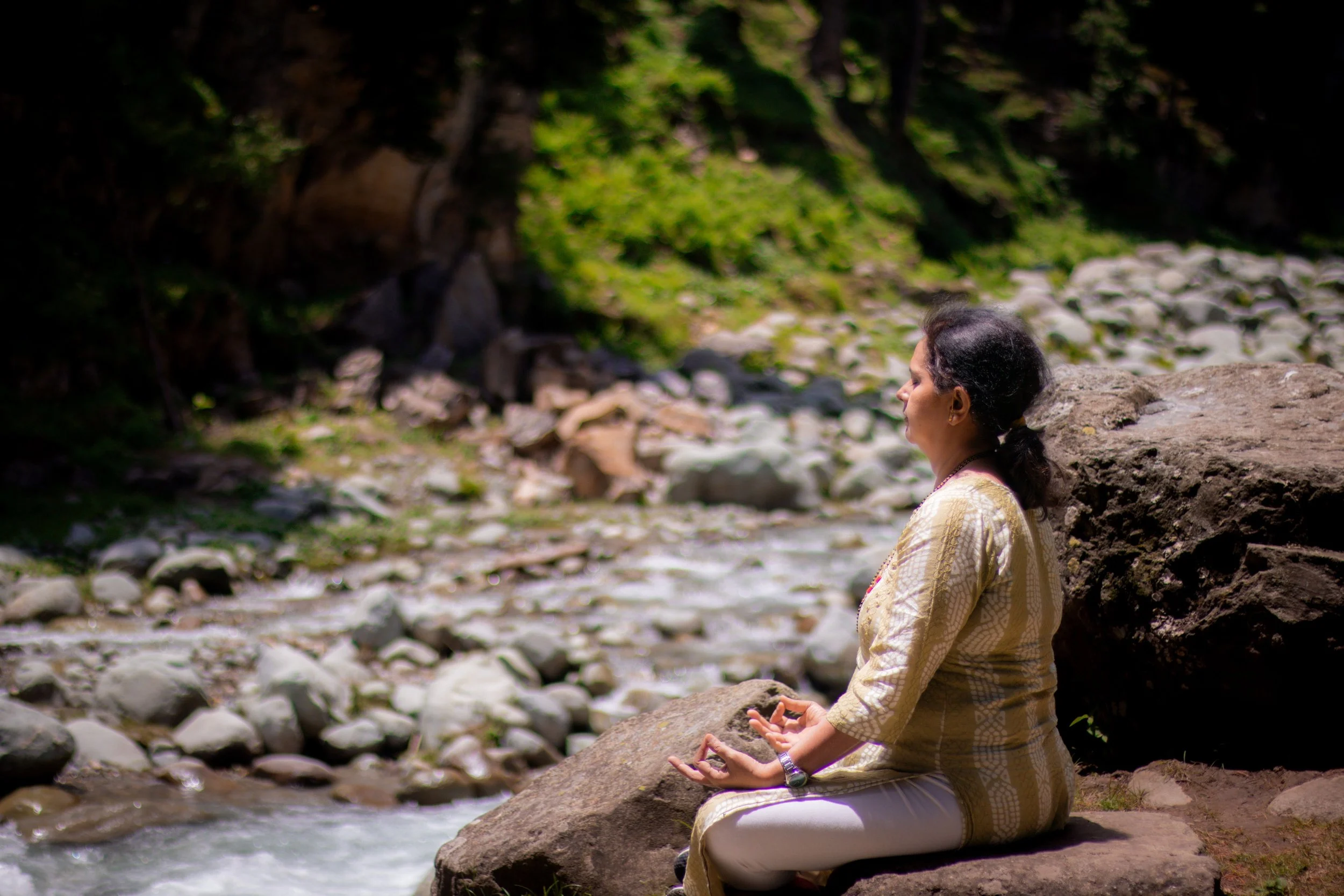
We talk constantly about physical health.
Sometimes mental health.
But I think spiritual health deserves a place in the conversation too.
For me, my relationship with God, prayer, gratitude and remembering that I'm part of something bigger than my current circumstances have become incredibly important pieces of wellness.
Your spiritual practice may look different from mine.
But I believe we all need meaning.
We need purpose.
We need moments of stillness.
We need something beyond the endless pursuit of optimizing ourselves.
Health isn't just about how long we live. It's about how deeply we live.
Sometimes the Answer Isn't More
This is something my own health journey has taught me again and again.
When I wasn't feeling well, my instinct was often:
What else can I take?
What else can I test?
What else can I do?
Bioenergetic scanning became an incredibly useful tool for helping me look at patterns in my body and determine where I might need additional support.
But ironically, one of the greatest things this work has taught me is that the answer isn't always adding something.
Sometimes my body needs more support.
Sometimes it needs less stress.
Sometimes it needs sleep.
Sometimes it needs movement.
Sometimes it needs sunshine and fresh air.
Sometimes it needs me to stop researching my health and go play outside with my kids.
That's why I believe bioenergetic work should complement the foundations—not replace them.
You Don't Need to Do All of This Perfectly
Please don't turn this blog post into another wellness checklist.
That's the opposite of the point.
You don't need a perfectly organic kitchen.
You don't need the world's best water filtration system.
You don't need to wake up at sunrise every morning.
You don't need to meditate for an hour.
You don't need to throw away everything in your house.
Start where you are.
Open the door tomorrow morning and stand outside for a few minutes.
Drink some water.
Eat a nourishing breakfast.
Take a walk.
Call a friend.
Cook dinner.
Say a prayer.
Turn the lights down.
Go to bed.
Health can be that simple sometimes. 🩶